
In 1957, the good citizens of Laos were handed a wad of cash and several tonnes of cement by the US government and instructed to use it to build an airport in the capital city, Vientiane. Instead, they decided to erect a giant concrete replica of the Arc De Triomph, earning it the nickname ‘the vertical runway’. We knew we’d like it here.
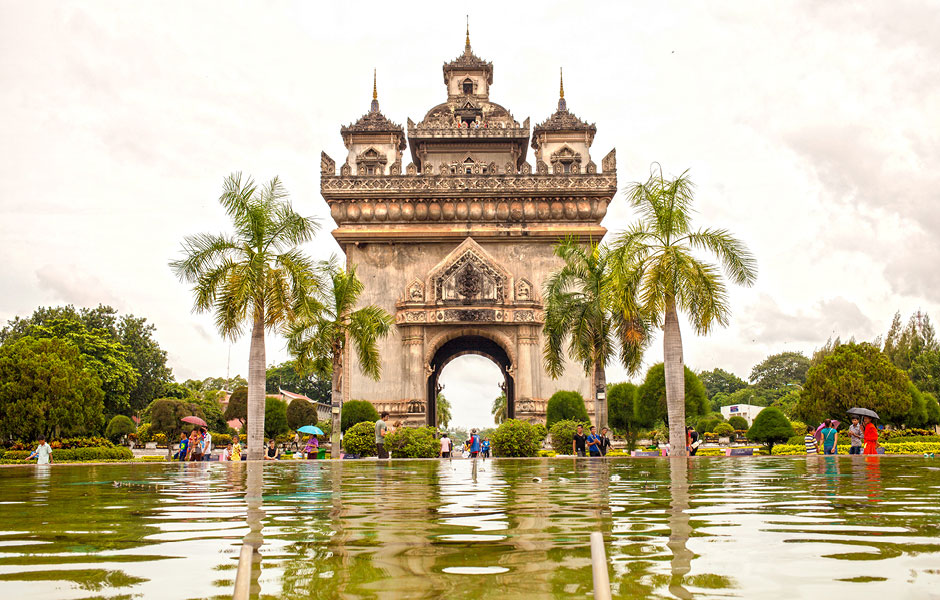
Spiritual, beautiful and very chilled, Lao PDR (People’s Democratic Republic – although locals insist it stands for ‘Please Don’t Rush’) is a landlocked nation wedged between China, Thailand, Burma, Vietnam and Cambodia. It’s one of the poorest places on earth and incredibly, the most heavily bombed country in history.
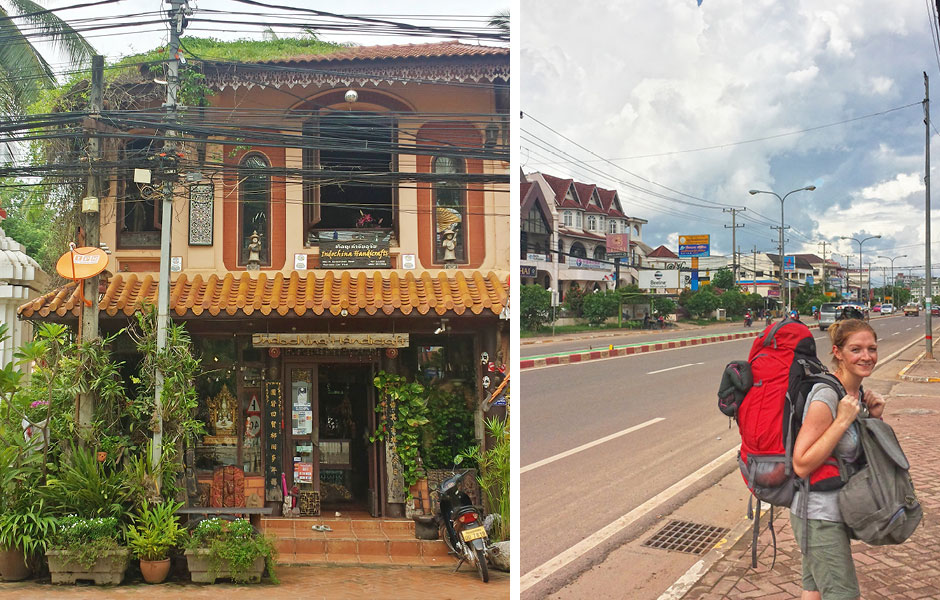
After a month in China, we’d grown used to the simple conversion of Stirling into Yuan and having landed in Vientiane Airport withdrew a seemingly enormous sum of cash (90,000 kip) which turned out to be £6.50. So thrown were we by the new currency that we refused a lift to our hotel from a kindly Tuk Tuk driver, thinking he was charging us £17 and stoically walked five kilometres from the airport with 15 kilos of luggage on our backs. In fact, he was offering to take us for 75p.
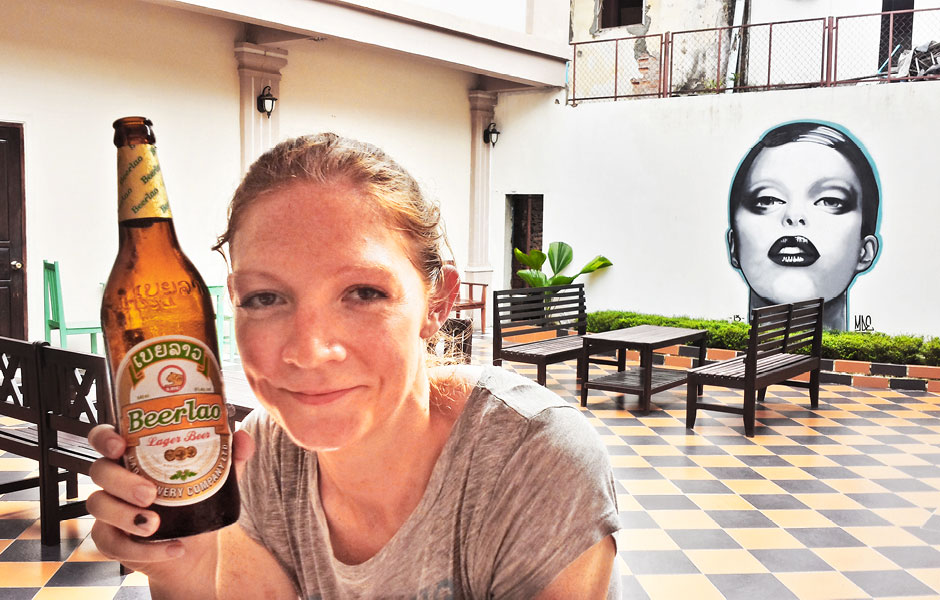
Displaying early symptoms of heatstroke, we finally reached the Vientiane Star and were greeted with a huge smile and two giant bottles of cold Beerlao at a cost of 45p each. Yup, we would definitely like it here. That afternoon, we threw off the shackles of Chinese internet censorship and spent three hours on Google and Facebook…just because we could.
Our first evening in Vientiane began in the relative sophistication of Lao Kitchen restaurant, sampling delicate fresh Summer Rolls, sticky rice, BBQ pork and papaya salad, but descended quickly after Elliot was introduced to Lao Lao – a hideous transparent rice-based “whiskey” (45% alcohol and 55% god knows what) of which he consumed copious amounts, in rapid succession. A poor choice, one might suggest, on the eve of a day’s sightseeing.
Unsurprisingly, Elliot’s mood was somewhat sombre as we headed out early to explore Vientiane, a capital city like no other we’d visited before. There were no skyscrapers, no queues of heavy traffic, no imposing government buildings or ostentatious palaces. Even the embassies were sleepy little cottages decorated with flower baskets and painted in pretty pastel shades.
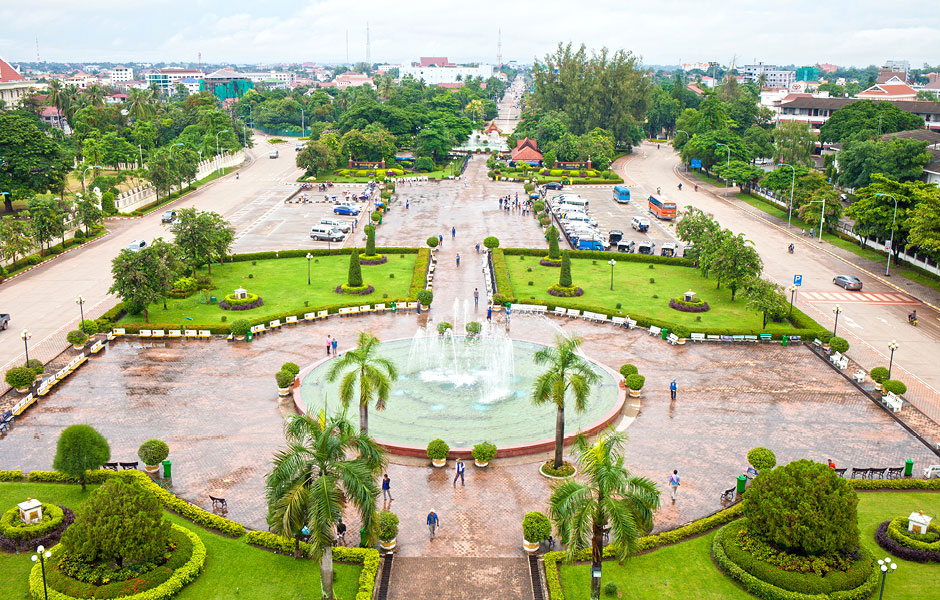
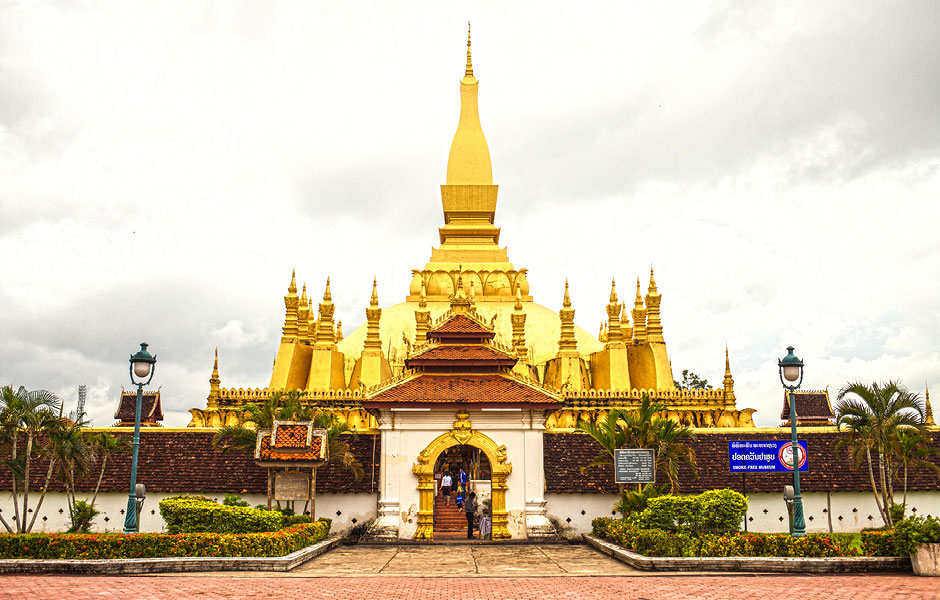
Much of the architecture had a European feel and no wonder, the French had their mitts on Laos (and most of SE Asia) from 1893 to 1949 and it was both incongruous and sort of comforting to stroll down Rue Du Puits and Rue de la Mission. After climbing to the top of the Patuxai Arch (Arc De Triomph) and looking out over the city we headed to Pha That Wat, a huge golden ‘stupa’ with Buddha statues draped in saffron sashes and wafts of burning incense.
El finally perked up after a massive Calzone and soon got chatting to Barbara from Belgium, a lone traveller who suggested the three of us visit the nearby COPE Centre. COPE is a local not-for-profit which provides prosthetic limbs and rehabilitation for people with disabilities, many of whom have been injured by explosives.
During the Vietnam War, US planes dropped an estimated 270 million “bombies” (sub-munitions from cluster bombs) on Laos, around 80 million of which failed to explode. The countryside is now littered with these unexploded devices and 25% of villages in Laos remain effected. Our visit served as a stark reminder of the terrible legacy of war that remains in this wonderful part of the world.